A little know-how.
How to choose an e-reader
Compare screen size, library access, note-taking and portability before choosing an ecosystem.
Your practical checklist
Start here
Start with three books you actually want to read: a purchase, a library loan and a personal document. Work out how each reaches the exact reader you are considering. A screen you like is only useful if it opens those books in your country and preserves the features you need.
A file extension is only half the answer
EPUB usually lets text reflow as you change the font size. PDF usually preserves a fixed page. Neither label tells you whether the file has digital rights management (DRM): account and licence controls that limit which software can open it. Changing the filename or converting a protected file does not make its licence compatible.
| Workflow | What must match |
|---|---|
| Direct reading | The reader opens that format itself. A DRM-free EPUB can be copied to a compatible reader without conversion. |
| Transfer or conversion | A computer or service prepares or delivers the book. Send to Kindle accepts suitable DRM-free EPUB files and converts them; that is different from copying an EPUB over USB for native Kindle reading. |
| Licensed borrowing or purchase | The reader or app must support the book’s DRM and account/service. A supported EPUB extension alone is not enough. |
An .acsm download is a licence file used to obtain a protected book through compatible software, not the book itself. Follow the library’s current authorisation method for that title. Authorisation accounts and supported transfer apps can change, so an old forum walkthrough is not proof of a working route.
Verify the library route where you live
Libby’s “Read with Kindle” option is for participating US libraries and eligible titles. It does not make a German or UK library loan Kindle-compatible. On supported Kobo readers, integrated Libby/OverDrive borrowing is offered in selected countries, including the UK, Canada and the US; Germany is not on Kobo’s current integrated-service country list. Country support still does not establish that your particular library or title works.
For a German library using Onleihe, identify whether it runs Onleihe 2.0 or Onleihe 3, then check that version’s current e-reader list for the exact model. Kindle e-readers are not an Onleihe route. Onleihe does not actively support every EPUB reader, so a Kobo EPUB specification is not a guarantee. A library app working on a phone does not mean that app can be installed on a dedicated reader.
- Sign in to your own library account and open the details of a book you want. Record the service name, available reading/download formats and the country attached to the service. Confirm your card actually includes that digital collection.
- For the exact candidate model, find the service’s supported-device instructions. Record whether borrowing happens on the reader, in a phone app followed by sync, or through an authorised computer transfer. Include any required account, app, firmware version and loan-format restrictions.
- Borrow an available short book or a title you already want, then follow that route on a borrowed/demo reader or during a permitted trial. Download fully, turn Wi-Fi off and reopen it. If it fails, note the exact error and whether the title, authorisation or device is unsupported. Do not buy on the assumption that a missing “Read with” option will appear later.
If hardware testing is unavailable, mark that route “documented, not tried.” Ask the library to confirm the model, service version and book format together. You can keep using its supported phone/tablet app while resolving the gap; there is no need to replace a working reading setup.
Give the screen a real document
Use your own permitted sample files, not only a shop’s carefully chosen pages. Download a novel sample in the language you read and a PDF or comic with typical page density. Match the font size you would use at home, then turn several pages while holding the device normally.
- Novels: enlarge the font, try line spacing and check a dictionary entry. Read in normal room light, then lower light, adjusting the front light rather than judging maximum brightness alone. Check whether page buttons or touch gestures are easy with either hand.
- PDFs: open a page with small text, columns or a diagram. Try portrait, landscape and crop/zoom if available. If every line needs panning, the display is too small for that document workflow; conversion cannot reliably reconstruct every fixed layout or scanned page.
- Comics and illustrated books: inspect speech bubbles, coloured keys and fine labels. Try page turns and panel navigation where supported. A larger tablet you already own may serve colour or frequent zooming better than a small e-ink display.
- Annotations: highlight a passage, add a typed or handwritten note where supported, close the book and reopen it. Export the note and open the export on your computer. Check whether it includes the page context and whether your own documents have the same features as store purchases.
A stylus being supported does not mean every file accepts handwriting. Transfer method can matter too: for example, Kindle Scribe’s supported PDF annotation features differ between documents delivered through Send to Kindle and those copied over USB. Test the actual route you will use.
Keep the exit route visible
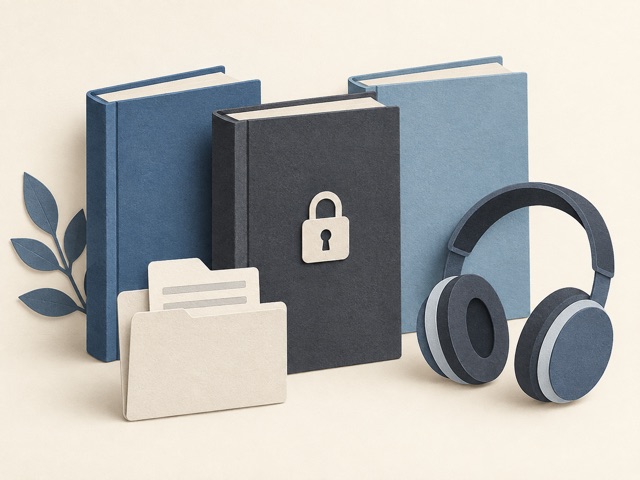
In your existing book account, open a purchased title’s details and look for a legitimate download/export option and its format. Some DRM-free purchases can travel to another ecosystem; protected purchases and subscription loans may remain tied to the original service. Treat each important title separately rather than assuming the entire shelf will move.
Write one line for each of your three sample books: source → transfer method → reader → offline result → notes/export result. Choose only when the important routes are either proven or covered by trial terms you accept. If novels work well on your current reader and difficult PDFs are occasional, keeping the reader and using a computer for those PDFs is a complete solution.
Put it into practice