
2 perspectives. One decision.
Anker Nano 3 vs UGREEN Nexode 100W: one device or a shared charger?
Compare a compact 30W USB-C adapter with a four-port laptop charger, including cable needs and power-sharing limits.
Researched · Specification comparison
The short answer
Nano 3 suits a light phone or tablet charging kit. Nexode 100W suits a laptop plus smaller devices, provided the shared output meets their needs. Its 100W rating is a total budget, not four 100W outputs.
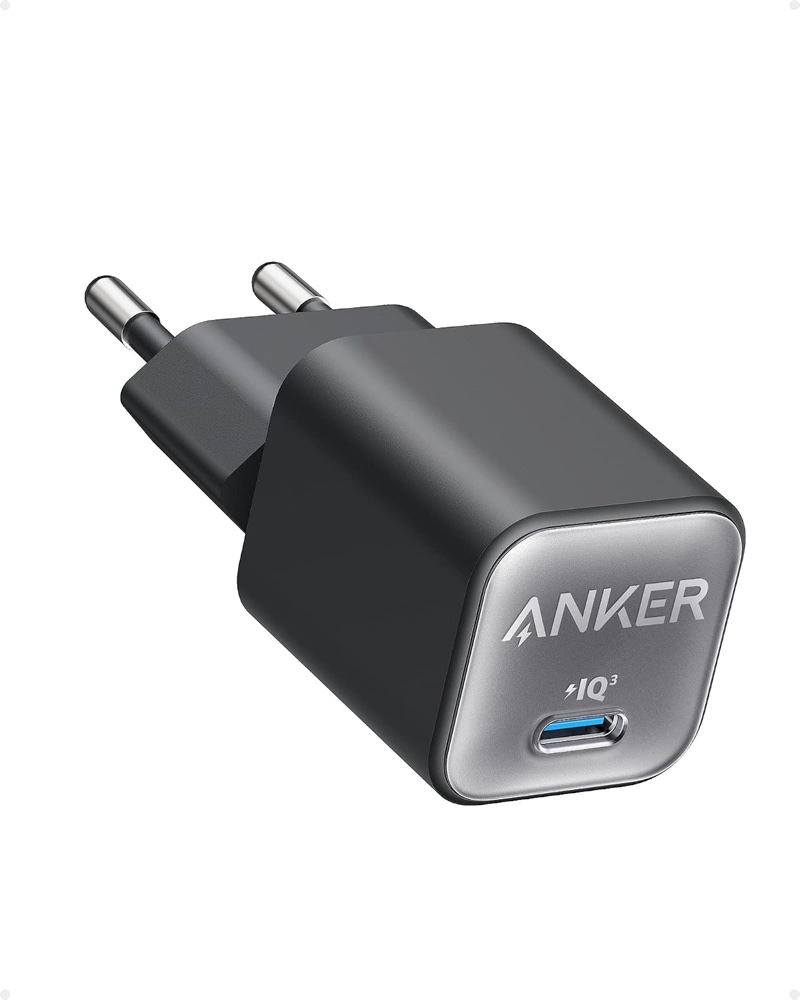
For one device
Anker Nano 3 · 30W EU
One black A2147 EU charger; fixed round pins; no charging cable.
Check it out: Anker 511 Charger Nano 3 30W on Amazon.de (opens a new tab)Image: Anker / Amazon.de product listing
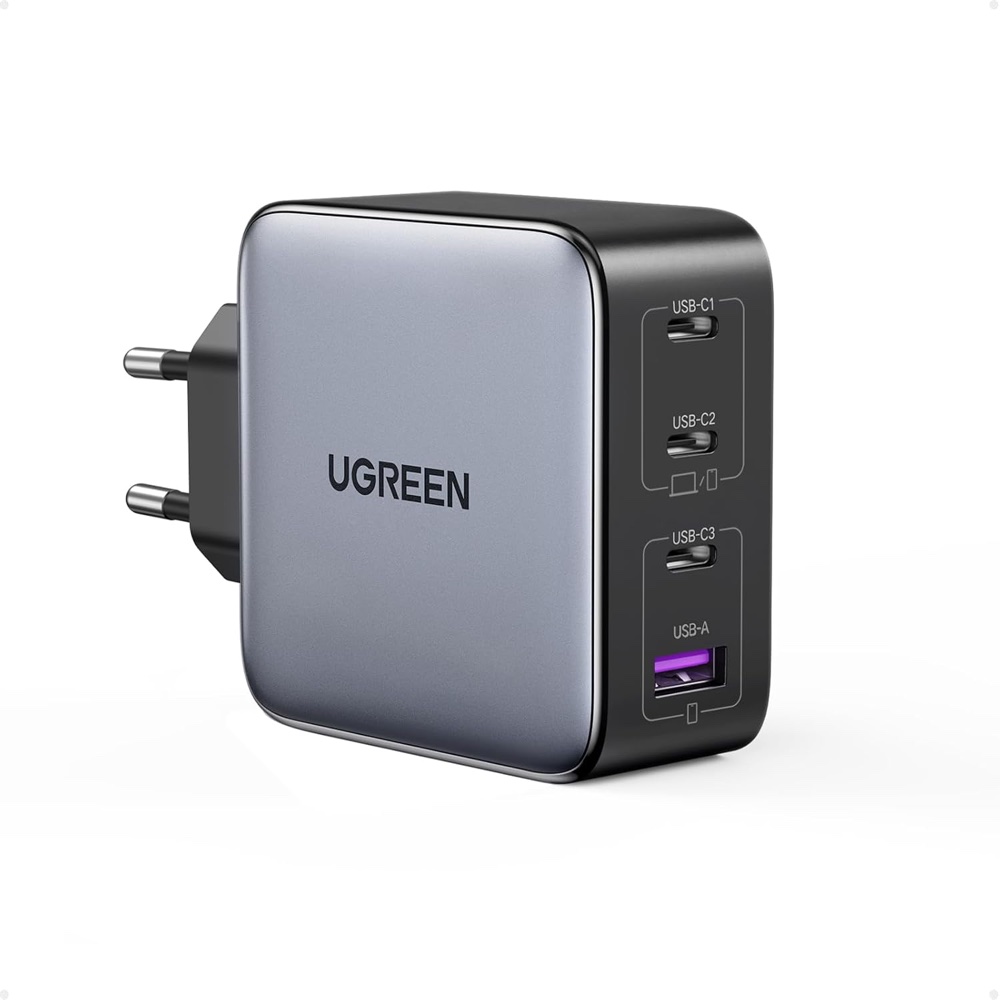
For shared laptop charging
UGREEN Nexode · 100W EU
One EU 3C1A charger, black with grey face; no cable. Manufacturer specifications contain revision conflicts.
Check it out: UGREEN Nexode 100W 4-Port Charger on Amazon.de (opens a new tab)Image: UGREEN / Amazon.de product listing
Affiliate links may earn us a commission. Compare the exact variant and current price before buying. Specifications are manufacturer claims, not our own test results.
Begin with the devices in your bag
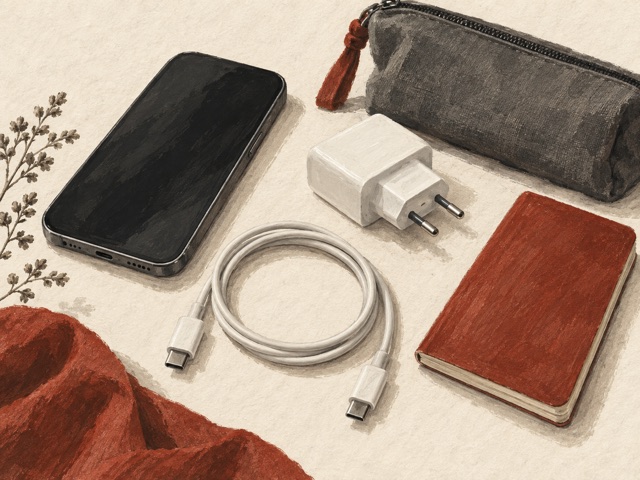
A single phone, earbuds or a modest tablet rarely needs a four-port charging block. Nano 3 is the simpler option when you carry one cable and charge devices in turn. Its EU pins are fixed, unlike the folding US version.
Nexode makes sense when a laptop travels with the phone. List what must charge simultaneously, then compare that demand with the shared-port table rather than adding every device’s maximum rating.
Read the power budget correctly
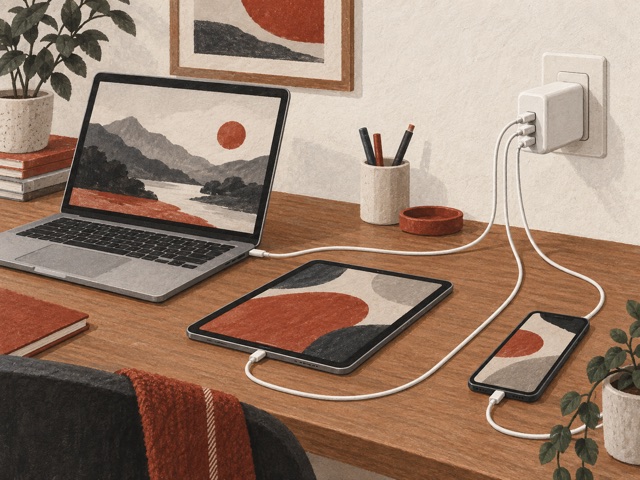
UGREEN’s main C1 and C2 ports can each provide up to 100W when used alone. Connect both and the advertised split becomes 65W plus 30W. Extra connections change the allocation again.
A laptop can therefore charge more slowly after another device is attached. The charger may briefly pause its outputs while renegotiating. This is inconvenient if a connected accessory expects uninterrupted power; a charging adapter is not a battery backup.
Match the cable and charging protocol
For 100W over USB-C, use a suitable 5A e-marked cable. A cable sold mainly for charging does not necessarily offer fast data transfer, and an existing low-power cable can limit the result. Neither linked package includes one.
The device also has to accept the available USB PD or PPS profile. A compatible connector does not guarantee a particular fast-charge mode. Nano’s 30W ceiling is useful for phones but restrictive for demanding laptop workloads.
Check the exact UGREEN revision
The linked UGREEN is the EU three-USB-C, one-USB-A model. The catalogue calls it grey; Amazon calls it black, with a grey face in the photograph. It is not the four-USB-C alternative.
UGREEN’s own page contains conflicting C3, PPS and input-current specifications. We preserve that uncertainty in the table instead of assigning the newer ratings to this ASIN. If a specific C3 output matters, confirm the supplied unit’s label before buying.
Choose for the everyday routine
Choose Nano 3 when one device at a time and a small travel kit meet your needs. Choose Nexode when consolidating laptop and phone charging is more useful than the smallest possible adapter.
Check socket clearance, cable reach and the laptop’s normal power requirement. Published charging times depend on the device and conditions; we have not measured either charger’s speed, heat or efficiency. The recommendation rests on connections and verified output limits.
Side by side
The differences that matter.
On smaller screens, swipe across the table to compare all products.
| At a glance | Anker Nano 3 · 30W EU | UGREEN Nexode · 100W EU |
|---|---|---|
| Linked version | A2147 Nano 3, black EU; B0B2VC6J8Q | Nexode 100W 3C1A EU; B091TV6LWN |
| USB ports | 1 × USB-C | 3 × USB-C, 1 × USB-A |
| Maximum total output | 30W | 100W shared |
| Single-port laptop output | 30W through USB-C | Up to 100W through C1 or C2 alone |
| Fixed USB-C profiles | 5V/3A, 9V/3A, 15V/2A, 20V/1.5A | C1/C2: 5V/3A, 9V/3A, 12V/3A, 15V/3A, 20V/5A |
| PPS | 3.3–11V/3A or 3.3–16V/2A; 30W maximum | Supported; manufacturer tables disagree on PPS current by revision |
| USB-C3 output | No third port | Manufacturer page lists both 22.5W and 30W revisions; exact listing revision unresolved |
| USB-A output | No USB-A port | Up to 22.5W alone; protocol-dependent |
| Two main USB-C ports together | Not applicable | C1 + C2: up to 65W + 30W |
| Three-device allocation | Not applicable | Manufacturer lists 45W + 30W + 22.5W; port combination matters |
| All ports in use | Not applicable | Shared budget; check exact unit’s allocation chart, especially C3/A sharing |
| Input supply | 100–240V AC, 50–60Hz, 1A | 100–240V AC, 50–60Hz; page conflicts between 1.8A and 2.3A revisions |
| EU plug | Fixed round pins; not foldable | EU round pins |
| Charging technology | GaN; PowerIQ 3.0 and PPS | GaN; USB PD and PPS, supported legacy fast-charge protocols |
| Cable requirement | Compatible USB-C cable; separately purchased | 5A e-marked USB-C cable for 100W; all cables separate |
| Laptop limitation | 30W may be insufficient during heavier workloads | Device negotiation and shared ports can reduce laptop power |
| Connection changes | One device at a time | Adding/removing devices can briefly interrupt charging during redistribution |
| Apple Watch consideration | Use a compatible separate charging puck | Prefer USB-C; manufacturer warns against simultaneous adjacent C3 use when Watch uses USB-A |
| Dimensions | Regional dimensions not confirmed; do not substitute US folding-plug measurements | Manufacturer body size approximately 69 × 69 × 33mm; plug excluded from comparison |
| Box contents | One charger and instructions | One charger; cables and devices separate |